
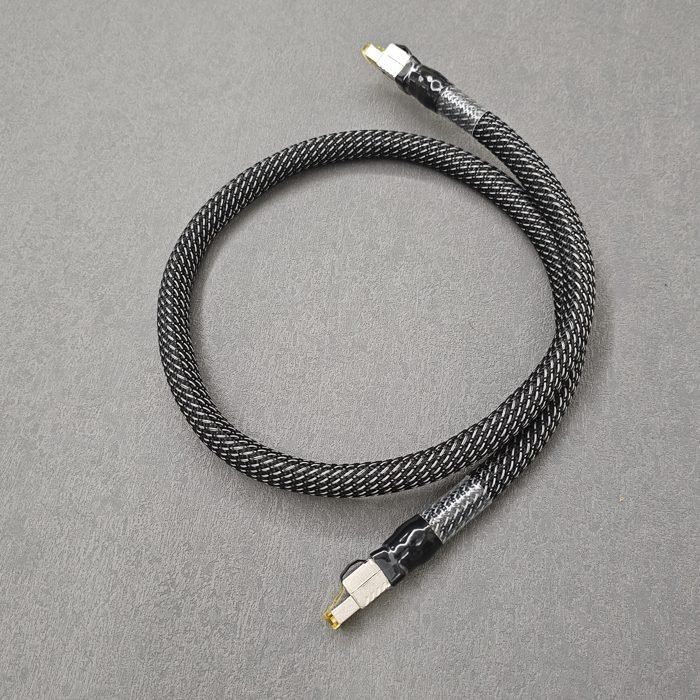
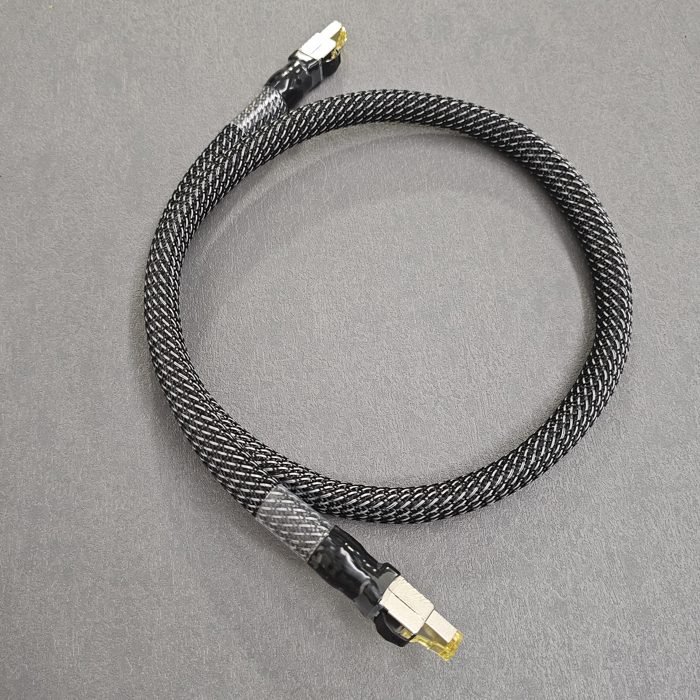
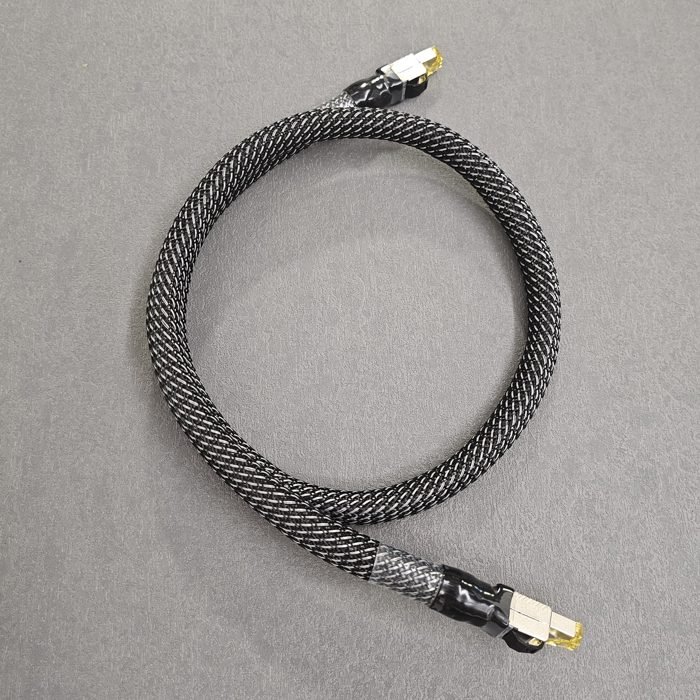
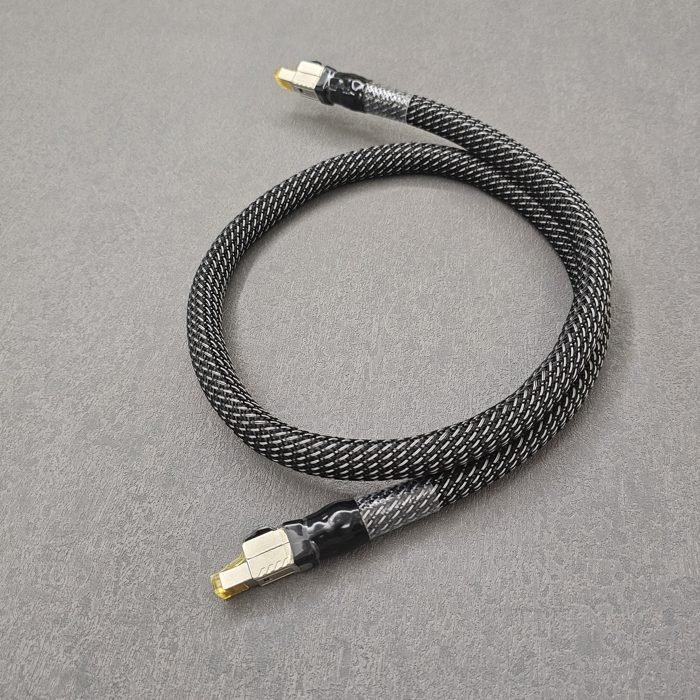
Description
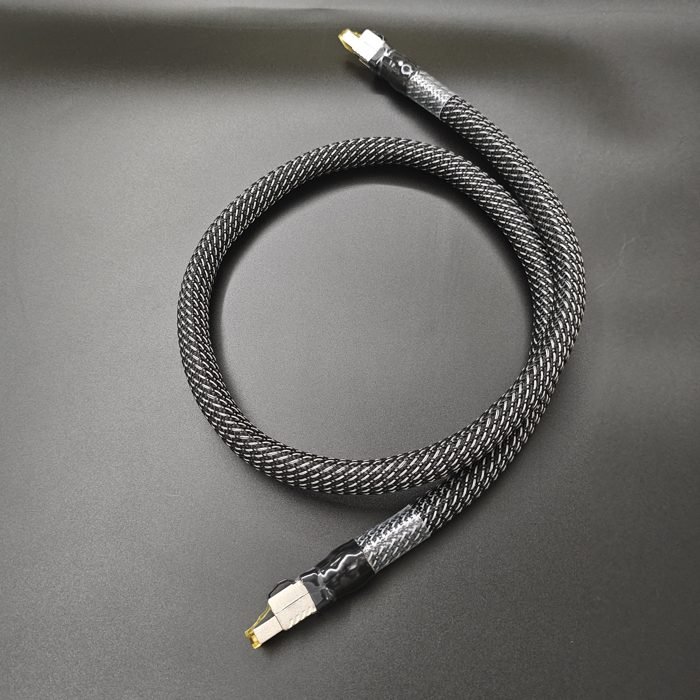
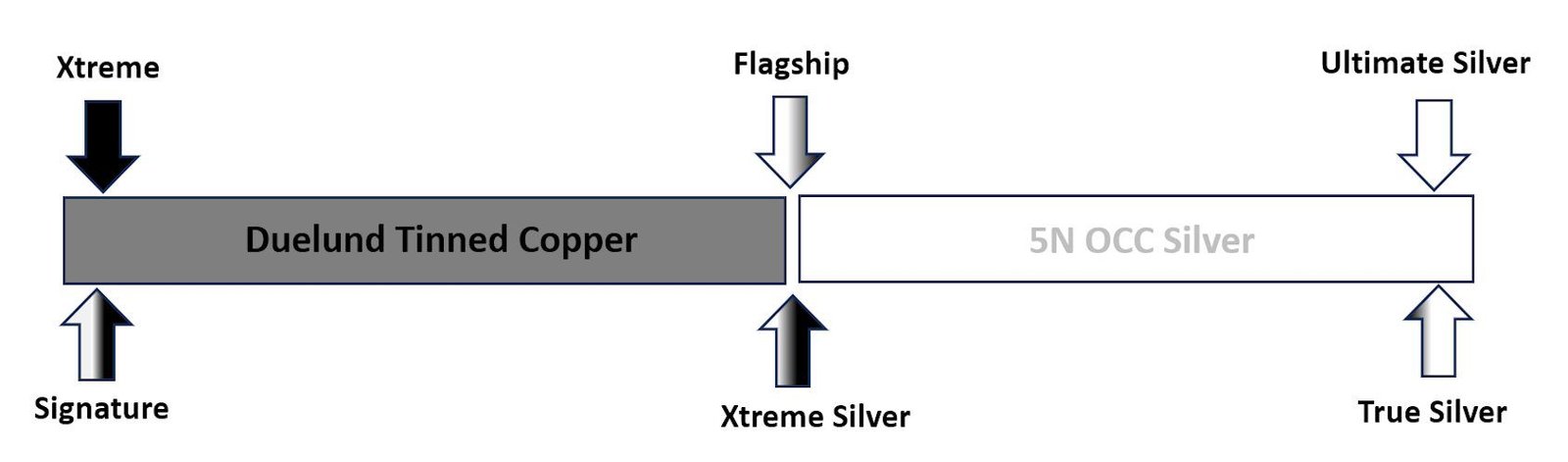
Designed and handcrafted using multiple combinations of Duelund tinned copper conductors, the Xtreme Series is carefully fine-tuned to optimize sound quality while minimizing signal transmission loss.
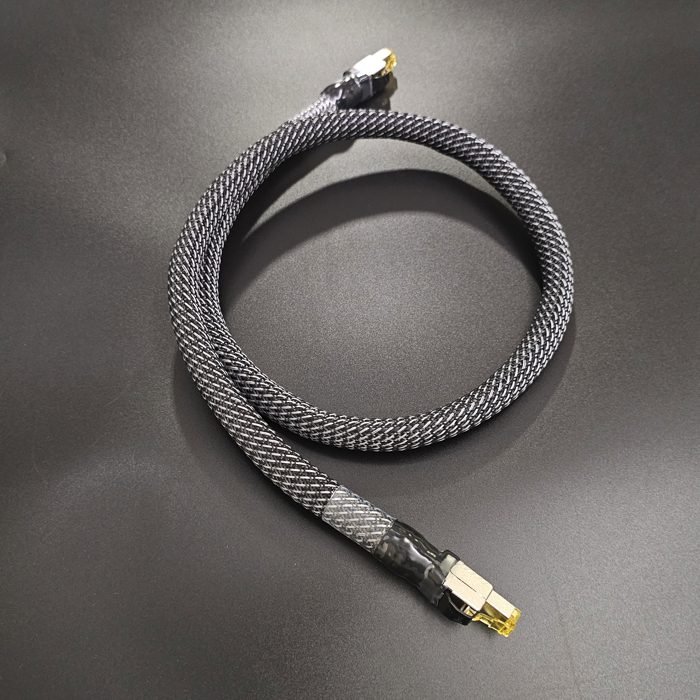
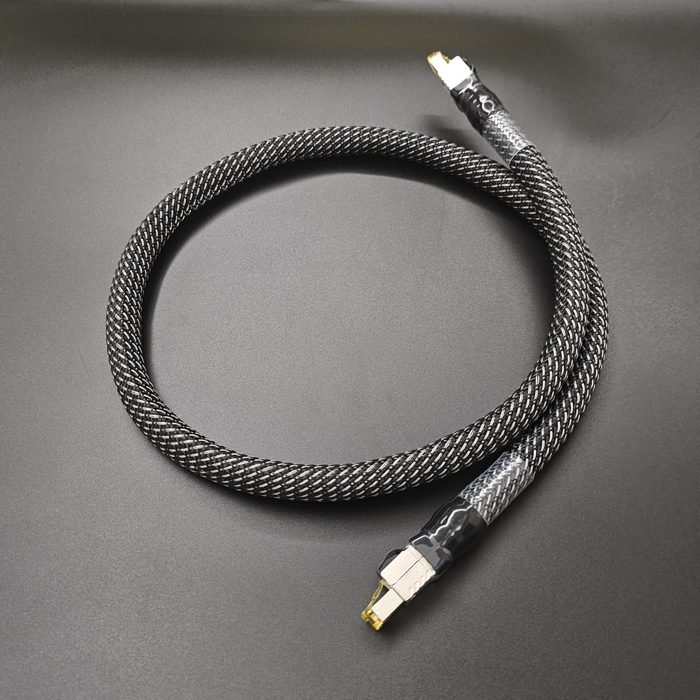
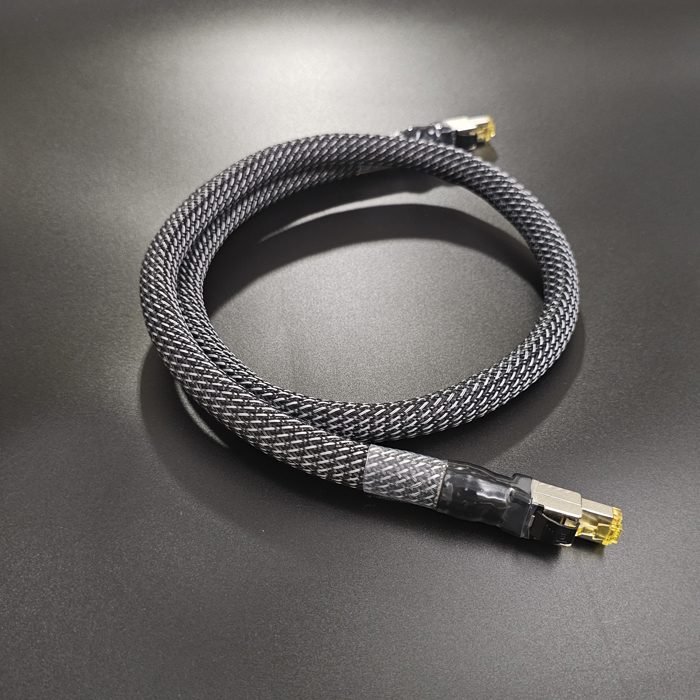
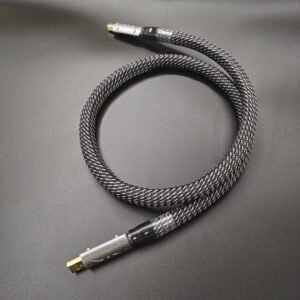
Audiolund Ethernet Cable/RJ45 I2S Cable ~ Xtreme Series
- Constructed using multiple combinations of Duelund tinned copper conductors (8 × 16 AWG), individually twisted, shielded, and carefully assembled.
- Terminated with high-quality RJ45 connectors and verified for compatibility with the RJ45 T-568B wiring standard.
- 100 Mbps connectivity is sufficient for many dedicated audio applications, such as internal network switches, while 1 Gbps is recommended for general network connectivity and higher-bandwidth devices, including Roon Core systems and music streaming applications. All Audiolund Ethernet cables are constructed with the full 8-conductor configuration for both audio and network applications.
- Can be used as an Ethernet cable or RJ45 I2S/IIS cable, using the RJ45 T-568B wiring configuration, to connect compatible Transport/DAC or Streamer/DAC components as an alternative to SPDIF or AES digital connections.
- Incorporates multiple types and layers of shielding materials to help reduce noise and RFI/EMI interference.
- Features a dedicated damping design using selected anti-vibration and isolation materials to help suppress unwanted mechanical vibration.
- Standard length: 1.0 m, with additional lengths available upon request.

RJ45 I2S/IIS Cable
When used as an RJ45 I2S/IIS cable, the standard version is constructed according to the RJ45 T-568B wiring configuration.
For equipment requiring a custom I2S pinout that differs from T-568B, please contact us.
- For custom RJ45 I2S/IIS cables, please provide the I2S pinout configuration of your equipment and the required signal direction.


What Is the Difference Between LVDS and CMOS?
LVDS uses low-voltage differential signaling, while CMOS interfaces typically use single-ended signaling with larger voltage swings. The lower signal swing and differential architecture of LVDS can provide advantages in high-speed digital transmission, including lower switching current and improved noise immunity.
For RJ45 I2S applications, it is important to confirm whether the connected equipment uses LVDS differential signaling or a single-ended interface, as the two are electrically different and are not directly interchangeable.
Xtreme Series Design
Conventional Ethernet cabling typically uses conductors in the 22 to 28 AWG range. The Audiolund Xtreme Series uses significantly larger 8 × 16 AWG Duelund tinned copper conductors.
Because this construction differs substantially from conventional Ethernet cable specifications, the Xtreme Series is primarily designed for dedicated high-end audio applications. We do not recommend it for general-purpose, non-audio network installations.
The Audiolund Xtreme Series Ethernet / RJ45 Cable represents our highest-level Duelund tinned copper design, developed for audiophiles seeking a full-bodied, natural, warm, and musically engaging presentation.
Its 8 × 16 AWG Duelund construction is designed to preserve the distinctive sonic character associated with Duelund tinned copper, delivering greater body, warmth, tonal richness, and musical presence.
Our Listening Impression
The Xtreme Series Ethernet / RJ45 Cable, constructed with 8 × 16 AWG Duelund tinned copper conductors, delivers the fullest expression of our Duelund-based cable design, characterized by a rich, full-bodied presentation with natural warmth and musicality.
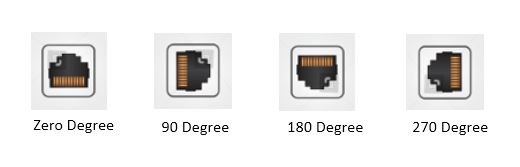
RJ45 Ethernet Plugs Orientation
Audiolund cables use substantial conductor and shielding configurations, resulting in a relatively thick and firm cable construction. Although the cable can be bent for installation, excessive twisting should be avoided.
For this reason, correct RJ45 plug orientation is important, particularly when equipment is positioned vertically or horizontally, or when connections run from top to bottom, left to right, or right to left.
To ensure the correct plug orientation for your system, please provide a clear photograph of your equipment viewed from the rear, showing the location and orientation of the RJ45 Ethernet connectors.
Cable Run-In
Most Audiolund cables employ multi-core constructions with multiple conductor combinations, and therefore require an extended run-in period before reaching their intended performance.
OCC Silver conductors use relatively thick solid-core wire and typically require a longer run-in period than Duelund tinned copper, which uses multiple parallel thin strands.
General Run-In Guidelines
- Most Audiolund cables: approximately 100–200 hours
- Xtreme Series: approximately 200–400 hours
These figures should be regarded as general guidelines, as actual run-in time may vary depending on the cable design, system, and usage conditions.


Reviews
There are no reviews yet